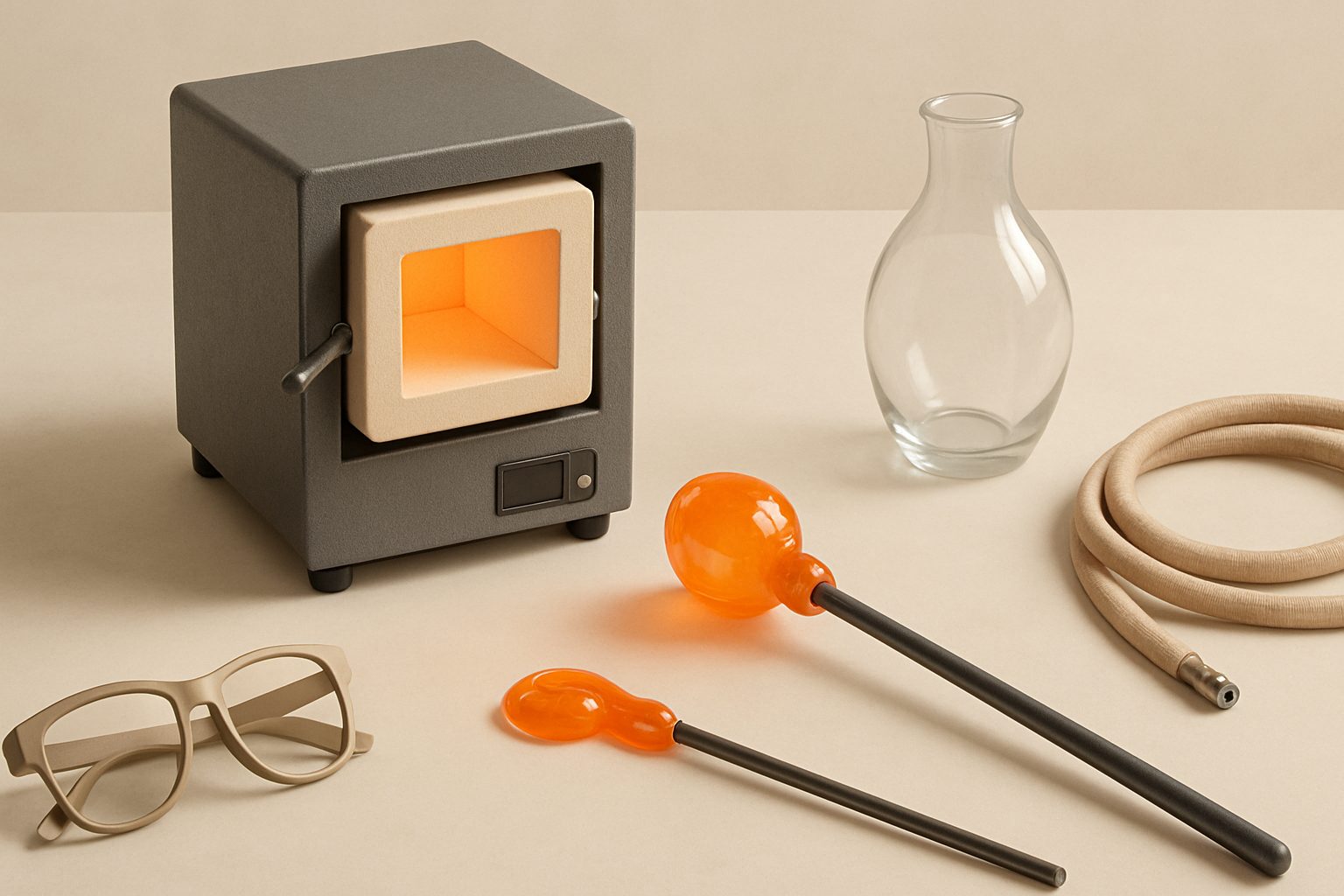
Paragon vs Skutt Glass Kiln: Which Should UK Buyers Choose?
If you're setting up a home glassblowing studio in the UK, selecting the right kiln is one of your most significant investments. Paragon and Skutt are the two brands that home glassmakers most often compare—both offer reliable electric kilns, but they serve different needs and budgets. This guide breaks down the key differences to help you decide which is right for your practice.
Who Makes These Kilns?
Paragon Industries is a US-based kiln manufacturer with over 80 years of experience. They specialise in kilns for glass, ceramics, and jewellery work. Skutt (also spelled Kiln Craft/Skutt) is another American manufacturer known for mid-range kilns at competitive prices. Both have solid reputations for reliability, though their product ranges and design philosophies differ considerably.
Kiln Size and Capacity
Paragon's glass kilns typically come in several configurations. Their smaller models—like the Paragon Infinity or Paragon Premier—offer interior chambers roughly 60 by 60 centimetres, which suits hobby and semi-professional work. Skutt's comparable models sit in a similar size bracket, with their 12-inch Kiln Nest or 18-inch Caldera providing flexible options for smaller studios.
For home use, capacity matters less than consistency. Both brands offer kilns large enough for serious artistic work without requiring industrial three-phase electricity, which most domestic properties lack.
Temperature Control and Heating Elements
Paragon kilns generally heat to around 1,200–1,300°C and hold temperature very evenly. They use nichrome heating elements and are known for gradual, predictable temperature rise—useful if you're doing annealing cycles and need fine control. The controller interface is straightforward: older models use mechanical controls, whilst newer ones offer digital programmability.
Skutt kilns reach similar maximum temperatures (typically 1,200–1,250°C) and also use nichrome elements. Their main distinguishing feature is their top-loading design, which some glassmakers prefer for loading fusing work without bending. Skutt kilns are generally lighter and easier to relocate than comparable Paragon models.
Electrical Requirements
Both brands operate on standard UK single-phase 240V electricity. However, power draw varies by model. Most home-suitable versions draw 3–6kW, meaning you'll need dedicated circuits and potentially an electrician to confirm your home's supply can handle it. Paragon models tend to draw slightly more power but heat more evenly as a result. Skutt's models are often slightly more efficient, reaching temperature in marginally less time.
Check the specific wattage of whichever model interests you—it directly affects your installation cost and whether you need additional electrical work.
Build Quality and Durability
Paragon kilns are built sturdy, with emphasis on long-term reliability. The insulation is thick, and the frame is robust. They're often considered the safer bet if you want a kiln that'll last 20+ years with minimal maintenance. Replacement elements and parts are widely available, and spares aren't prohibitively expensive.
Skutt kilns are also well-built but with a slightly different philosophy—they optimise for lighter weight and easier assembly. The trade-off is that they may require element replacement slightly sooner in heavy use. Still, Skutt has a loyal customer base and parts availability is good, though UK distributors may have longer lead times than for Paragon.
Price and UK Market Availability
Paragon kilns typically cost £4,000–£8,000 depending on model and specification. Skutt kilns generally sit at £3,000–£6,500. Price parity in the UK is affected by import duties, distributor margins, and exchange rates, so it's worth checking current pricing from UK stockists rather than relying on US list prices.
Paragon has wider UK distribution through specialist suppliers, so availability and delivery times are often better. Skutt models are available through fewer UK retailers, which can mean longer lead times or higher prices due to smaller import volumes.
Annealing Performance
Glassblowers often prioritise even annealing cycles. Paragon kilns excel here—their design produces very consistent internal temperatures, crucial if you're working with thick glass. Skutt kilns anneal well too, but some users report slight hot spots, particularly in larger models. For studio practice where consistency matters, this is worth considering.
Which Should You Choose?
Choose Paragon if you:
- Value long-term durability and minimal maintenance
- Want the widest availability of spares in the UK
- Prioritise even heat distribution for consistent annealing
- Are prepared to spend slightly more upfront
- Prefer a kiln that'll reliably run for decades with minimal fussing
Choose Skutt if you:
- Need to keep capital costs down
- Want a lighter kiln you might relocate
- Prefer faster heat-up times
- Have space constraints
- Don't mind a slightly shorter replacement-element cycle
The Bottom Line
Both kilns will serve a home glassmaking studio well. Paragon represents a "buy it once, use it forever" approach; Skutt offers solid performance at a lower entry point. For UK buyers, the decision often comes down to your budget and whether you can access a local distributor easily. Check with specialist kiln suppliers in the UK—prices, availability, and delivery times vary considerably, and a good distributor can provide invaluable installation and maintenance support that matters more than the brand itself once you're working.
More options
- Paragon Kilns (Glass & Jewellery Range) (Amazon UK)
- Skutt Glass Kilns (Amazon UK)
- Digital Kiln Controllers & Pyrometers (Amazon UK)
- Glass Fusing Supplies & Kiln Furniture (Amazon UK)
- Lampworking & Glassblowing Tools (Amazon UK)