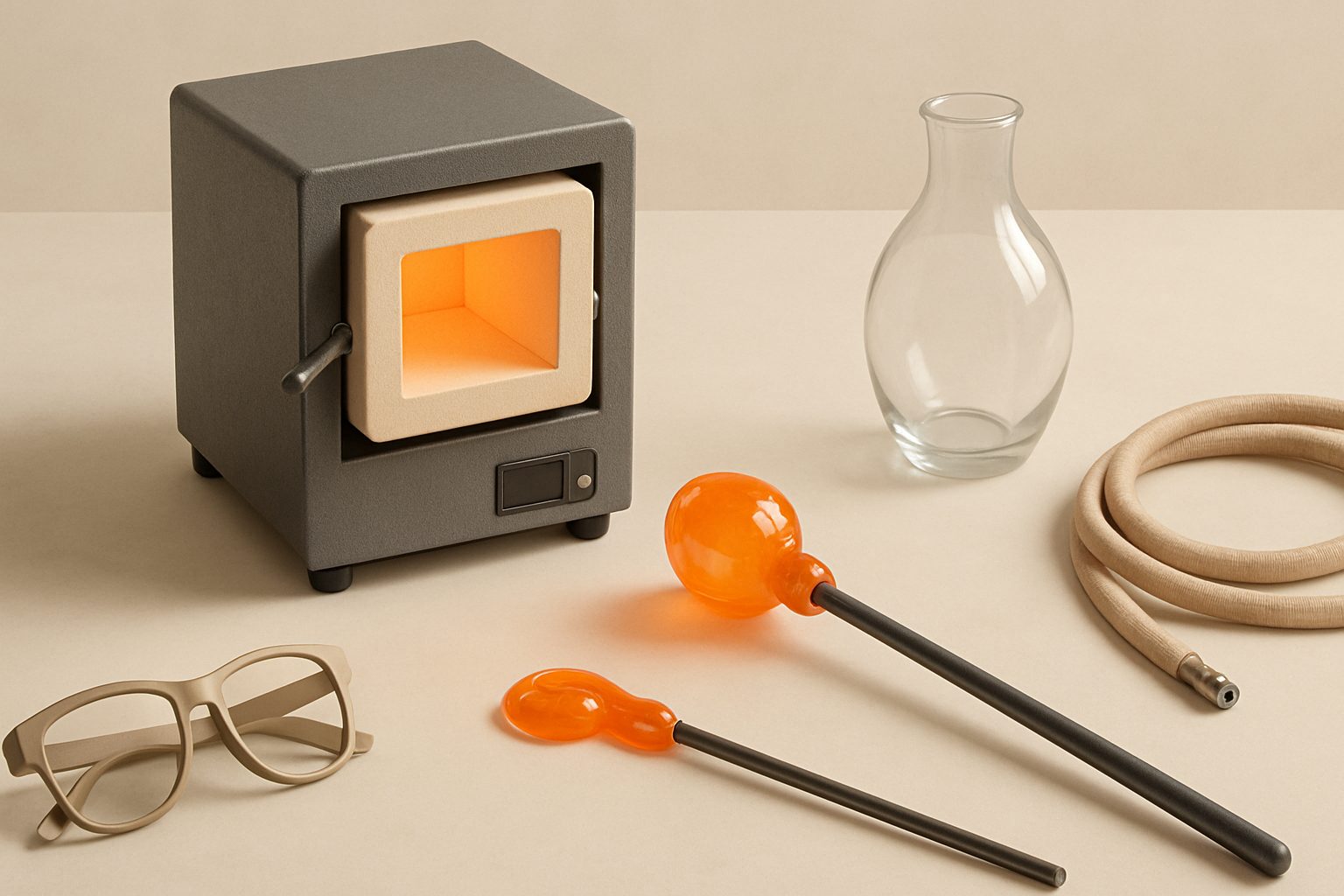
Kiln-Formed Glass Equipment Guide — Everything UK Artists Need to Get Started
Kiln-formed glass opens up a whole world of creative possibilities, from fused pieces to slumped bowls and cast sculptures. But before you can produce stunning work, you need the right equipment. This guide walks through exactly what you'll need to set up a functioning kiln-forming studio in the UK—not just the obvious bits, but the often-overlooked essentials that make the difference between frustrating failures and consistent results.
The Kiln: Your Central Investment
The kiln is the foundation. You'll find two main categories aimed at hobbyists and semi-professionals: electric kilns designed for ceramics that can handle glass, and kilns purpose-built for glass work. Glass kilns are the better choice if budget allows—they hold temperature more evenly, which matters when you're fusing or casting.
Look for a kiln with digital temperature control and a ramp-and-hold programme. You need to heat slowly, hold at peak temperature, then cool slowly. A basic electronic controller removes the guesswork. Size-wise, a 30-litre chamber suits most home studios. Larger kilns eat more electricity but let you batch work.
Electrical supply matters in the UK. Most hobby kilns run on a 13-amp domestic circuit, though larger models need 16-amp or 32-amp supply. Check your workshop's capacity before buying. A kiln that can't reach full temperature because your electrics can't feed it is money wasted.
Budget reality: expect to spend £800–£2,500 for a decent used or entry-level new kiln. Buying second-hand is sensible if you can inspect it first—most glass kilns last decades with minimal wear.
Molds: Casting Forms and Release Methods
Molds define your shapes. You have two routes: buying pre-made molds or creating your own.
Pre-made molds in ceramic or plaster give you immediate options—bowls, dishes, jewellery shapes. These work, though plastic molds sometimes warp under high heat. Ceramic molds are sturdier but more expensive upfront.
Making your own molds gives creative freedom. You can cast from clay, carve into kiln brick, or use materials like graphite and mica. This sounds advanced but it's genuinely not—a basic clay mold handles most projects.
Whatever you use, you need kiln wash. This is a critical supply. Kiln wash (usually a clay/alumina mixture) stops melted glass sticking permanently to your mold. Without it, you'll lose molds and potentially damage your kiln shelf. Apply it to any surface glass might touch. You'll reapply it regularly, so budget for ongoing supplies.
Glass Preparation: From Scrap to Raw Material
Most UK artists start with waste glass—offcuts from stained glass, recycled bottles, reclaimed architectural glass. Free glass is tempting, but mixed composition glass (different coefficients of expansion) causes cracks and breaks. Learning to sort glass matters more than you'd think.
You'll need a glass scorer for cutting sheet glass cleanly. A basic handheld glass cutter (tungsten carbide wheel) costs £10–£30 and works perfectly. For frequent cutting, a dedicated glass-cutting table speeds things up, though it's not essential early on.
Glass nippers are non-negotiable. Use them to snap scored glass into manageable pieces. Cheap nippers frustrate; decent ones (around £20–£40) cut consistently and stay sharp longer. Mosaic nippers work fine for smaller pieces.
Safety gear is mandatory: safety glasses that protect from UV (important in the kiln room), and cut-resistant gloves when handling sharp glass edges. You'll be grateful for both.
Kiln Furniture: Shelves and Supports
Inside your kiln, you need shelves—rigid kiln shelves hold molds and work. These are expensive (£30–£80 each depending on size) and fragile, but they last years. Buy at least two, ideally three, so you can stack work.
Stilts or trivets elevate pieces off the shelf for air circulation and even heating. For casting, these are less critical than in pottery, but they still help. Kiln posts—the pillars holding shelves apart—are essential for stacking.
Shelf paper (also called kiln paper or shelf liner) goes under work to aid release and reduce washing time. It's cheap (£10 for a large sheet) and saves hours cleaning kiln shelves. Replace it every few firings.
Peephole plugs keep heat in and let you monitor work. Cheap ones allow heat loss; decent insulating plugs maintain temperature stability.
Workshop Setup and Ancillaries
Temperature monitoring inside the kiln matters. A basic digital thermometer with a thermocouple probe (£20–£40) shows real kiln temperature, not just controller display. Many beginners find their kiln doesn't reach stated temperature; a thermocouple reveals if it's the kiln or the controller lying.
Ventilation isn't often discussed but it's important. Kilns emit moisture and fumes, especially with certain glass types and binders. A workshop fan or cracked window during firing prevents fume buildup. If you're in a confined space, extract-fan-level ventilation is worth considering.
A heat-proof work surface near the kiln—a metal table or kiln shelf on a stand—lets you prep and cool pieces safely. Kilns radiate serious heat; you need space to work nearby without burning yourself.
Labelling tape and a notebook sound basic but save endless confusion. Firing schedules, mold types, glass sources—write it down. You'll run the same successful firing again, and you'll avoid repeating mistakes.
Getting the Essentials Right
Start with the kiln, a few shelves, basic kiln wash, a glass cutter, nippers, and safety gear. You can add molds gradually. Many UK artists discover that a simple setup with good basics beats expensive equipment used poorly.
Buy kiln-forming glass supplies from specialist UK stockists rather than generic ceramic suppliers. They'll stock borosilicate glass, proper kiln wash, and equipment designed for glass work—not just adapted pottery gear.
Once you've got equipment sorted, technique is next. But with the right tools, you're ready to start creating.
More options
- Paragon Kilns (Glass & Jewellery Range) (Amazon UK)
- Skutt Glass Kilns (Amazon UK)
- Digital Kiln Controllers & Pyrometers (Amazon UK)
- Glass Fusing Supplies & Kiln Furniture (Amazon UK)
- Lampworking & Glassblowing Tools (Amazon UK)