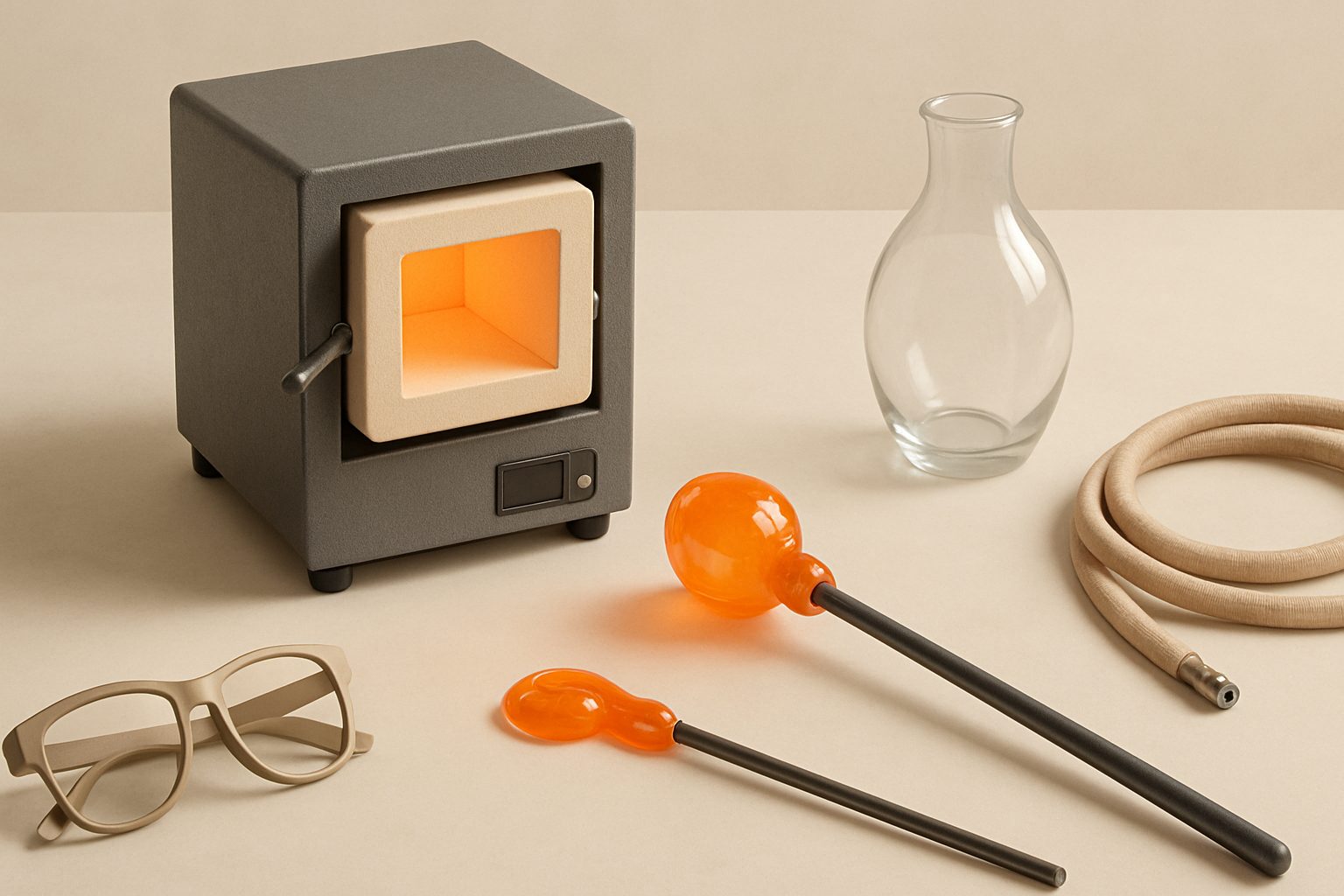
Glass Kiln Safety Guide for UK Home Studios — What You Must Know
Setting up a glass kiln in your home studio isn't inherently dangerous, but it demands respect. Unlike furnaces or torches, kilns present specific hazards: sustained high heat, electrical demand, fumes, and potential carbon monoxide buildup. UK regulations add another layer—your mains supply, building regs, and neighbours matter. Here's what you actually need to know before switching on.
Electrical Supply and Wiring
Most hobby glass kilns draw between 3kW and 9kW. Check your property's main fuse first. A standard domestic supply is 60A or 80A total, split across circuits. A 3kW kiln on a 16A circuit works fine; a 7kW unit absolutely needs a dedicated 32A supply, often requiring an upgrade.
Call a qualified electrician—don't improvise. UK regulations require a qualified installer (Part P certified) for any permanent high-load circuit. Your electrician will assess whether your consumer unit can handle it, install appropriate MCBs or RCBOs, and run proper cable (usually 6mm² for 32A). This costs £300–600 but avoids fire risk and keeps your insurance valid.
Never daisy-chain a kiln through extension leads or adaptors. The wire will overheat before the circuit breaker trips. If you're renting, get landlord permission in writing and use a removable circuit—still require an electrician.
Ventilation: Non-Negotiable
Kilns produce fumes. Boron compounds (from frits), silica dust (during loading), and water vapour all need to leave the room. Poor ventilation doesn't just irritate—chronic exposure to silica dust carries real respiratory risk. CO can also accumulate if combustion air is starved.
Install extraction before you turn on the kiln:
- A dedicated extractor fan removing air directly outside (not just circulating it) is the baseline. For a small studio (under 30m³), a 200–300mm axial fan is often sufficient. Size it based on air changes: aim for 6–10 per hour minimum.
- Position inlet air: Kilns need fresh air to draw from. Crack a window on the opposite side of the room or install a passive inlet vent.
- Ducting matters: Smooth rigid ducts work better than bendy plastic hose, which adds resistance and reduces flow.
Test your extractor is working by watching kiln fumes. They should move visibly toward the outlet, not linger in the workspace. A cheap smoke pen costs a few quid and shows you air movement clearly.
Carbon Monoxide Detection
Kilns running in enclosed spaces can produce low-level CO, especially if ventilation drops or the kiln door seals tightly. You won't feel it—CO is odourless and colourless.
Buy a battery-powered or mains CO detector (£20–40) and mount it at breathing height roughly 2 metres from the kiln. Test it monthly and replace batteries yearly. If it goes off, stop work, open windows, and call an engineer. Don't ignore it as a false alarm until you've had a fume test done.
Temperature Management and Heat Loss
Kilns radiate fierce heat. A 1200°C kiln surface often sits at 200–300°C. Position it away from walls (minimum 30cm clearance), especially combustible ones. Insulation boards around the kiln help, but they must be fire-rated (not foam). Check the kiln manufacturer's specs—many include minimum clearance distances.
Never leave a kiln running unattended unless it's a fully automated kiln with proper kiln-sitter or electronic controller. A malfunction or power surge can cause element failure or overfiring, which vents fumes and extreme heat.
Personal Protective Equipment
- Safety glasses: Essential during loading and unloading. Molten glass can spit; frit particles fly. Use proper safety specs, not sunglasses.
- Heat-resistant gloves: Cotton or leather, rated for at least 250°C. Synthetic gloves melt.
- Apron: Denim or canvas, not nylon. Frit and tiny glass shards stick to everything.
- Dust mask or respirator: When handling powdered frit (before it's wet) or refractory materials. An FFP2 minimum; FFP3 if you're working daily.
- Long sleeves and closed shoes: Obvious, but easy to skip on summer days. Flying glass doesn't care about your tan.
Kiln-Specific Hazards
Refractory wear: Kilns age, and so does their firebrick. Cracks expose you to higher external temperatures and can trap moisture. If cracks are visible, the kiln is ready for a rebuild (usually not worth it on hobby kilns under £1000). Plan for this cost.
Element failure: Electric kiln elements burn out and need replacing. Buy spares in advance. If an element ruptures mid-fire, shut down immediately and let it cool fully. Don't open the door while it's still warm—thermal shock can crack bricks.
Moisture in bisque: Wet or damp glass work will steam violently as it heats. Always pre-dry bisque to 80°C minimum before ramping to full temperature, or the thermal shock cracks pieces and vents fumes.
Planning Your Studio
Think beyond the kiln. You'll need:
- Clear floor space around it (no clutter near the exhaust)
- An accessible electrical outlet and isolated circuit
- Good ventilation ducted to outside air
- Nearby shelving for kiln furniture and spare elements
- A cool-down area where finished work sits safely away from foot traffic
Insurance can be tricky. Inform your home insurer you're running a kiln. Some policies don't cover workshop equipment; others add it for a few quid extra. Ignore this and a claim gets denied.
Final Word
Glass kiln safety isn't complicated, but it's not optional either. Most accidents stem from cutting corners: poor wiring, no ventilation, ignored CO alarms, or neglected maintenance. UK homes are built to tight tolerances and often close-packed with neighbours. A properly set-up kiln in a well-ventilated studio with sound electrics is genuinely safe. Improvise, and you're playing with fire—literally.
More options
- Paragon Kilns (Glass & Jewellery Range) (Amazon UK)
- Skutt Glass Kilns (Amazon UK)
- Digital Kiln Controllers & Pyrometers (Amazon UK)
- Glass Fusing Supplies & Kiln Furniture (Amazon UK)
- Lampworking & Glassblowing Tools (Amazon UK)