Best Kilns for Fused Glass Jewellery Making in the UK (2025)
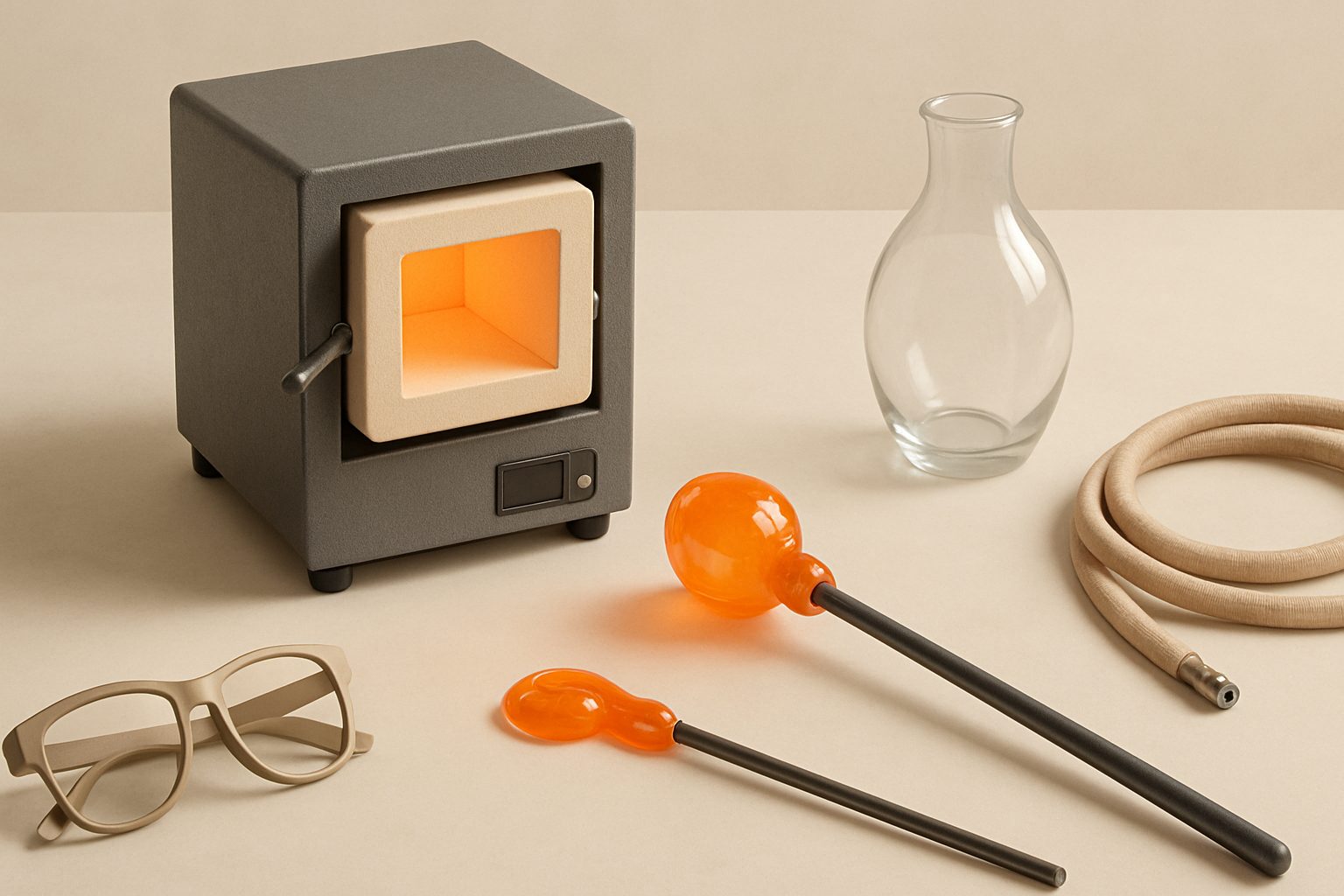
Fused glass jewellery is one of the most accessible entry points into glasswork. You don't need a full studio, expensive equipment, or years of training—but you do need the right kiln. A kiln rated for fused glass jewellery is fundamentally different from a pottery kiln or a high-fire studio furnace. Get this choice wrong, and you'll either waste money on overkill equipment or end up with cracked pieces and frustration.
This guide focuses on kilns that work for jewellery-scale fusing in a UK home studio, plug into a standard 13-amp socket, and deliver reliable results without taking up your entire spare room.
What Makes a Kiln Suitable for Fused Glass Jewellery
Fused glass jewellery doesn't need extreme heat. Most pieces fuse beautifully between 750°C and 830°C. This is much lower than borosilicate lab work (which tops out around 900°C) and nowhere near the 1200°C+ range of studio glasswork or pottery.
The real requirements are precision and ramp control. Glass fractures under thermal stress. Fire too fast, and thermal shock will crack your pieces. Fire too slow, and you'll waste energy and time. A good jewellery kiln has a programmable controller that ramps temperature gradually, holds the peak temperature precisely, and cools at the right speed.
Another critical factor is heating element placement. Front-loading or top-loading designs matter less for jewellery than they do for large work, but you need even heat distribution across the chamber. Small hot spots create uneven fusing and stress points.
Finally, check power consumption. Most tabletop kilns run on standard 13-amp UK domestic sockets. Anything larger often requires professional 16-amp or 32-amp installation, which adds cost and isn't always practical in a home studio.
Micro Kilns vs. Tabletop Models
Micro kilns have a chamber roughly 15–25 cm across. They're genuinely portable, heat up in under 30 minutes, and use minimal electricity. Perfect if you're renting, space-conscious, or testing whether glasswork is a serious hobby before investing heavily. The trade-off: you can fit roughly 4–6 small earring pairs or one pendant per firing. Production is slow if you're making jewellery to sell.
Tabletop kilns typically have chambers of 30–40 cm. They take a bit longer to heat up (45–60 minutes), use more power, and take up more room, but you'll easily fit a batch of 15–20 pieces. If you're fusing jewellery regularly or planning to sell, a tabletop unit pays for itself quickly because you're not firing constantly.
Both types plug into a standard socket if you choose wisely. There's no middle ground between micro and tabletop; anything larger usually requires rewiring.
Key Specifications to Look For
Temperature control: Look for a programmable kiln controller with at least three-segment programming (ramp-up, soak, cool). Cheaper fixed-temperature models are nearly useless for fused glass—they fire at the same speed regardless of what you're making.
Interior dimensions: Measure carefully. Advertised capacity is often optimistic. You want enough space to lay pieces flat on a kiln shelf without them touching the heating elements or each other.
Element type: Kanthal wire elements (the most common) are reliable and affordable. They last 5–10 years with sensible use. Silicon carbide elements cost more but run hotter and last longer if you ever upgrade projects.
Insulation: Firebrick thickness matters. Thicker insulation keeps heat in, reduces exterior surface temperature (safer), and lowers running costs. Look for kilns with at least 5 cm of insulation on all sides.
Warranty and support: Many UK suppliers offer 2–3 year warranties and replacement element packs. That matters. Check whether the manufacturer or distributor is based in the UK or EU—EU-based suppliers are often quicker for repairs or replacements.
Budget and Value
Expect to spend £300–500 for a basic micro kiln with decent programming. Tabletop models run £600–1200. Cheaper kilns (sub-£250) exist, but they typically lack programmable controllers or have poor insulation, which means slow ramps, high running costs, and uneven results.
Don't skip a glass-cutting mat and proper kiln shelf. A £20 glass-cutting mat is essential for preparing your stock, and a proper kiln shelf (not scrap ceramic) prevents heat damage to kiln internals and extends equipment life. Dichroic glass offcuts and test samples cost £10–30 initially; buy a few to practise ramp rates before committing to expensive pieces.
Setting Up Your First Studio
You'll need a sturdy, heat-safe table away from curtains and loose fabrics. Open a window when firing—kilns don't emit dangerous fumes, but ventilation is sensible. Have a heat-proof work area nearby for unpacking pieces (kilns cool to handling temperature in 2–3 hours, but patience saves disappointment).
Keep a digital thermometer handy to verify kiln accuracy. Compare the kiln's display against an independent measurement during your first few firings. Dodgy sensors are rare but not unheard of.
Making Your Choice
If you're a serious beginner or planning to sell jewellery, invest in a tabletop kiln with proper programming. The speed and batch capacity justify the extra cost. If you're testing the hobby, renting, or working in a genuinely cramped space, a micro kiln is genuinely sufficient—don't feel pressured to oversupend.
Either way, choose a UK-based or well-established EU distributor. Support matters more than hunting for a bargain kiln from an unknown international seller that may lack warranty backup or spare parts availability here.
Fused glass jewellery is a rewarding hobby and a viable small business. The kiln is your biggest purchase, but it's also your longest-lasting investment. Choose carefully, and you'll be firing beautiful pieces for years.
More options
- Paragon Kilns (Glass & Jewellery Range) (Amazon UK)
- Skutt Glass Kilns (Amazon UK)
- Digital Kiln Controllers & Pyrometers (Amazon UK)
- Glass Fusing Supplies & Kiln Furniture (Amazon UK)
- Lampworking & Glassblowing Tools (Amazon UK)