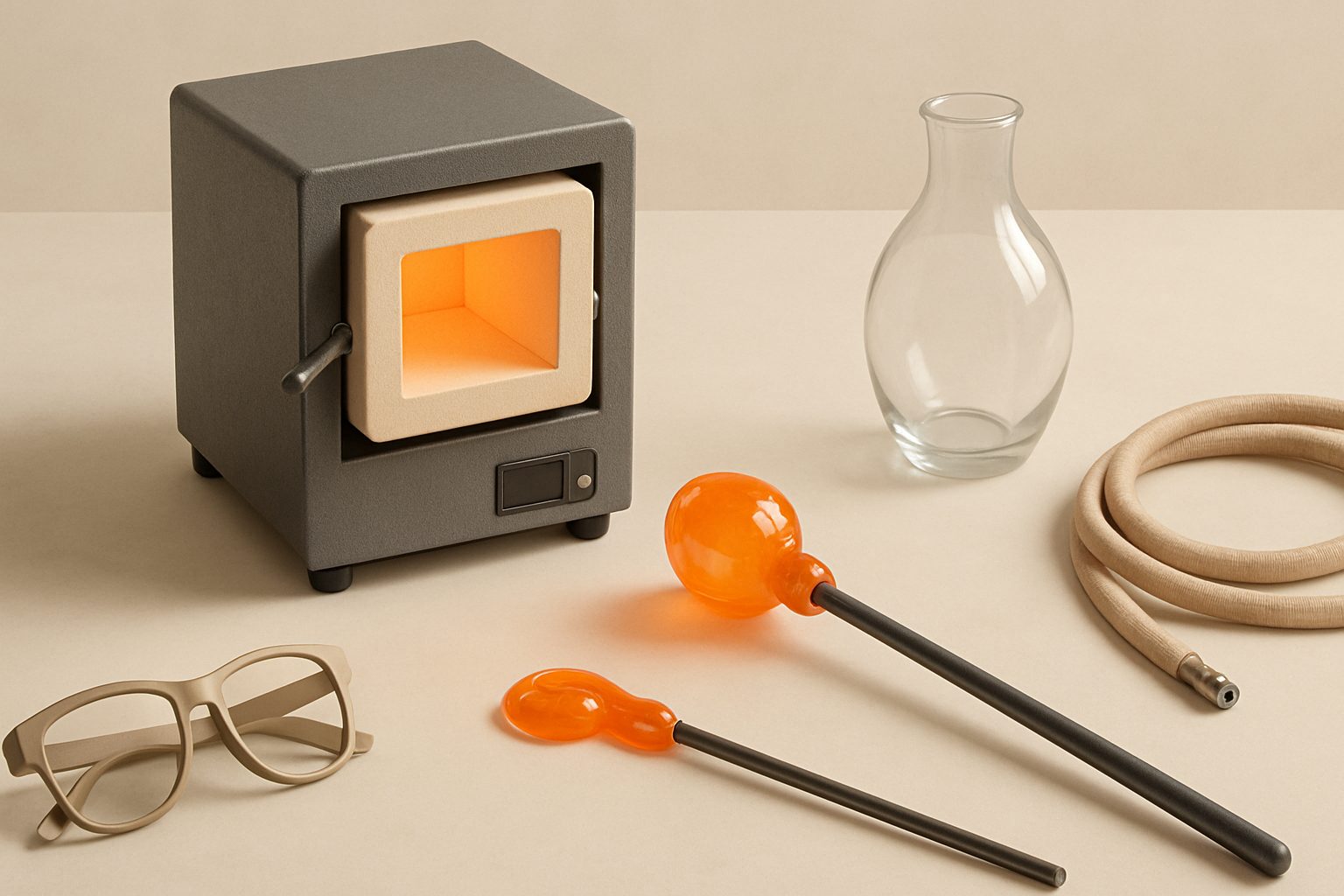
Best Kilns for Beginner Glassblowers in the UK — Top Picks for 2025
Getting started with glass fusing at home is more achievable than many assume, but choosing the right kiln makes all the difference between a rewarding hobby and a frustrating waste of money. Beginner kilns need reliability, sensible controls, and enough capacity to justify the cost without overwhelming a new maker. This guide covers the practical considerations and entry-level units that work well in UK homes and studios.
What to Look for in Your First Glass Fusing Kiln
Size and power requirements
Most beginner kilns fall into the 8–15 litre capacity range, which is large enough for meaningful projects (small fused panels, jewellery pieces, test work) without requiring industrial-grade electrics. UK homes typically supply 13-amp single-phase power, which limits you to roughly 3–4 kW kilns. Anything bigger usually needs rewiring or a dedicated circuit—both cost money and hassle you don't need at the start. Check the kiln's power draw before committing.
Preloaded firing schedules
Forget manually programming temperature ramps if you're learning. A kiln with built-in cycles for annealing, slow fusing, and tack fusing removes guesswork. Digital controllers with simple button navigation beat complicated menu systems. You'll spend your mental energy on design and technique, not fighting the kiln interface.
Insulation and durability
Fibre-brick insulation heats and cools faster than traditional kiln shelves, which is good for cycle time and power efficiency. However, fibre kilns shed particles over years of use—not a deal-breaker, but worth knowing. Cast-ceramic or kiln-brick interiors are tougher and more stable long-term, though they take longer to heat up and cool down. For a beginner, fast thermal cycles often matter more than immortal durability.
Safety features
A thermocouple that monitors actual chamber temperature (not just setpoint) prevents overheating and glass damage. Overshoot protection is standard on decent kilns. Look for units with a self-locking lid or prop that won't slam shut unexpectedly. Many beginners work with young people or in shared studios—safety features aren't luxuries.
Top Entry-Level Kilns Worth Considering
Paragon Xpress Mini 8
A popular starter kiln in the UK, the Xpress Mini reaches 1200°C and holds roughly 0.08 cubic metres. It runs on standard 13-amp power and includes preset firing schedules for most common glass fusing work. The controller is straightforward—a digital display with clearly labelled buttons. Heating time to full temperature is about 90 minutes, and cooling is passive (meaning you wait, rather than blast it with a fan). The fibre-brick interior is adequate for a beginner, though you'll replace it after 500–800 firing hours. Price sits around the £1,200–£1,500 mark. Honest con: it's not the most insulated kiln out there, so standing nearby during peak temperature is genuinely warm.
Nabertherm N 60/12 or Similar Small Kiln
German-made Nabertherm kilns are expensive—typically £2,000+—but they're tanks. Better insulation means lower running costs, more stable temperatures, and longer interior lifespan. The controls are intuitive, and Nabertherm's after-sales support in the UK is solid. If you plan to use the kiln multiple times weekly or want something that'll outlast your interest in the hobby by years, this is the safer bet. Con: they're heavy, take up more space, and overkill if you're unsure whether glass fusing will stick.
Protherm Glass Fusing Kiln (UK Supplier)
Designed specifically for UK hobbyists, Protherm kilns are mid-range (£1,600–£2,000) and often come pre-configured for standard glass fusing schedules. They're easier to source parts for locally and warranty support is more straightforward than importing. Capacity is usually around 12 litres, and they'll run on a dedicated 16-amp circuit. Honest con: less well-known globally means fewer online user forums and fewer secondhand units on the market if you want to upgrade later.
Used Industrial or School Kilns
Worth mentioning: secondhand kilns from schools, ceramics studios, or jewellery makers often sell for £500–£1,200. They're frequently overbuilt and outlast three hobbies. However, you won't have a warranty, and you'll need to test-fire it before committing. Always ask for the firing hour count (older doesn't mean worn-out, but 3,000+ hours in the chamber is worth noting). Transport costs can be steep, and you'll assume all responsibility for repairs.
Important Considerations Before Buying
Ventilation and studio space
Kilns release moisture and volatile organics from glass during fusing. Crack a window or use a small extraction fan—both are cheap compared to a kiln but easy to overlook. You'll also need a stable, level surface and at least a metre of clear space on all sides for safety and access.
Electricity and installation
If your circuit is undersized, upgrading costs £300–£800. Factor this in early. Have a qualified electrician check your supply before purchase, not after delivery.
Budget for consumables
Kiln shelves, stilts, and batt wash cost £50–£150 per year depending on how much you use it. Fibre-brick kilns need interior replacement every few years (£200–£400 for a beginner model).
Conclusion
The best kiln for you depends on how serious you are and how much space and power you have. If you're genuinely uncertain whether glass fusing will hold your interest, a used Paragon or entry-level Protherm is a smart compromise: capable enough to do real work, forgiving enough that mistakes are learning opportunities, and cheap enough to sell without regret if the hobby doesn't stick. If you've been sketching glass designs for months and you know this is the thing, investing in a Nabertherm or equivalent saves frustration later. Either way, prioritise preloaded schedules and straightforward controls. The kiln isn't your project—your glass is.
More options
- Paragon Kilns (Glass & Jewellery Range) (Amazon UK)
- Skutt Glass Kilns (Amazon UK)
- Digital Kiln Controllers & Pyrometers (Amazon UK)
- Glass Fusing Supplies & Kiln Furniture (Amazon UK)
- Lampworking & Glassblowing Tools (Amazon UK)