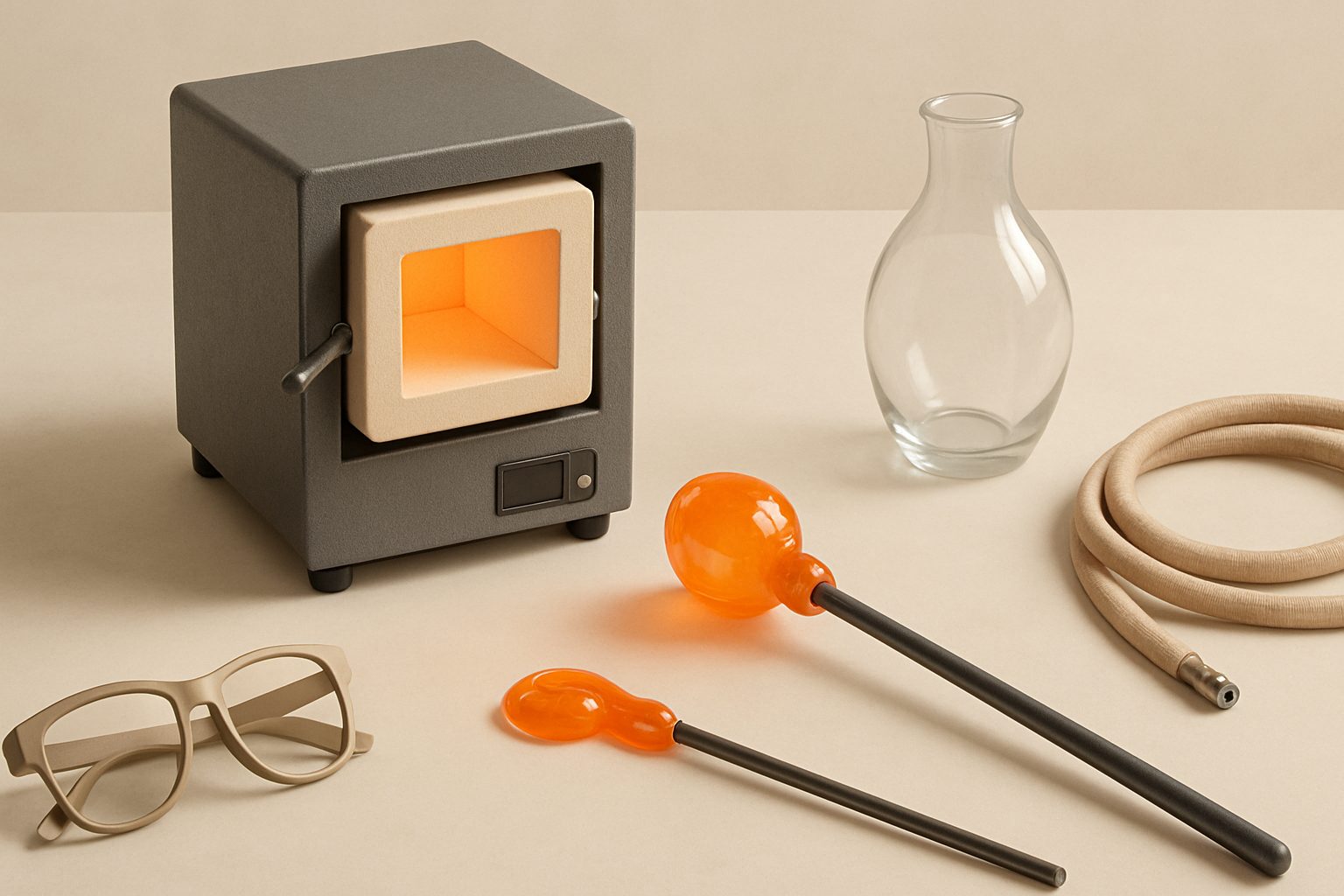
Best Affordable Glass Kilns Under £500 in the UK (Budget Buyer's Guide)
Glass kilns under £500 exist in the UK market, but you'll need to understand what compromises come with the budget. At this price point, you're typically looking at entry-level hobby kilns or smaller units from online retailers, rather than professional-grade equipment. The good news is that budget models are genuinely useful for bead-making, small fusing projects, and learning glasswork. The challenge is managing expectations around chamber size, heating speed, and durability.
What to Expect at the £500 Budget
Under £500, you'll find kilns with chamber volumes between 5 and 15 litres and heating elements rated between 500W and 1500W. This is perfectly adequate for hobby work, but won't support large-scale production or high-temperature work. Most budget kilns use simple analogue controllers rather than programmable ones, meaning you'll manually adjust temperature and timing. They also tend to have lower insulation than premium models, so they'll take longer to reach temperature and consume more electricity running.
These units are often imported directly from manufacturers in Asia and sold through UK retailers like Amazon UK, eBay, and specialist craft suppliers. Availability fluctuates, so you may find options one month that've disappeared the next. Buy quickly if you find something that fits your needs.
What You're Getting for Your Money
At this price, materials and manufacturing shortcuts are inevitable. Ceramic insulation may be thinner, metal casings may be less robust, and thermostats may be less precise. Some budget kilns arrive with minor cosmetic damage or misaligned lids. Warranty coverage is often limited to 12 months and doesn't always cover heating elements.
However, thousands of hobbyists use budget kilns successfully. They're reliable enough for low-volume work, and repairs or element replacements are affordable. A replacement heating element might cost £30–80.
Key Specifications to Compare
Chamber capacity: At £500 or less, expect 5–15 litres. Smaller kilns (5–8 litres) heat faster and cost less to run, but limit project size. Larger ones (12–15 litres) give you more scope but consume more energy and take longer to heat.
Wattage: Budget models typically range from 500W to 1500W. Lower wattage heats slowly but is cheaper to run; higher wattage reaches temperature faster. For hobby fusing, 1000–1200W is a sweet spot.
Maximum temperature: Most budget kilns max out at 1100–1200°C, which is sufficient for borosilicate glass fusing, bead-making, and annealing. If you plan to work with soda-lime glass or do serious casting, confirm the kiln can sustain the temperature you need.
Controller type: Basic analogue dials are standard at this price. Digital controllers with timer functions add cost but aren't essential for hobby work.
Where to Find Options
Amazon UK regularly stocks small electric kilns in this price range under categories like "pottery kiln" or "glass furnace". Search for terms like "small electric kiln 110v" or "hobby glass kiln". Prices typically range £250–480.
eBay UK has both new and second-hand options. Second-hand kilns can offer better value, but inspect listings carefully for signs of damage or element wear. Ask sellers about usage history and whether they'll ship (kilns are heavy and postage is expensive).
Specialist pottery and glass suppliers sometimes stock budget models, though they're pricier than online retailers. The advantage is you get expert advice and local support if problems arise.
Realistic Pros and Cons
Pros:
- Genuine entry point to glasswork without major investment
- Small footprint suits hobby workshops and home studios
- Reliable enough for learning and low-volume projects
- Replacement elements and repairs are affordable
- Fast heat-up and cool-down compared to larger studio kilns
Cons:
- Slow heating and cooling cycles (often 8–12 hours full heat-up)
- Less precise temperature control
- Higher running costs per unit volume than larger kilns
- May be noisy (cooling fans)
- Limited project size
- Cosmetic or alignment issues are common on arrival
- Thermostats can drift; you may need to check calibration
- Resale value is low
What Work Suits a Budget Kiln
These kilns excel at:
- Glass bead-making with rods and torches
- Kiln-fusing small decorative pieces
- Slumping into moulds
- Testing designs before running larger batches
- Educational use and hobby exploration
They're not ideal for:
- Production runs requiring tight temperature control
- Large sculptural pieces
- Work requiring sustained precise temperature for hours
- High-volume commercial work
Buying Tips
Check the power requirement before ordering. Some budget kilns run on 110V, others on 230V. Confirm your home electrics can handle it. A 1200W kiln on a standard UK circuit is fine, but don't overload.
Look for kilns with replaceable elements. Some cheap models have elements glued in, making repairs impossible.
Read recent reviews carefully. Feedback on uneven heating, controller reliability, and packaging condition matters more at budget prices.
Budget an extra £30–50 for a kiln shelf or two and appropriate safety equipment (heat gloves, eye protection).
Bottom Line
For under £500, you can buy a genuine, working glass kiln that will deliver years of hobby use. Expect slower performance and less precision than premium equipment, but don't assume budget means unreliable. Many people have successfully worked with affordable kilns for years. The key is understanding your project needs and choosing a model that fits your workspace and electrical setup. Start small, learn your kiln's behaviour, and upgrade later if you need professional-grade equipment.
More options
- Paragon Kilns (Glass & Jewellery Range) (Amazon UK)
- Skutt Glass Kilns (Amazon UK)
- Digital Kiln Controllers & Pyrometers (Amazon UK)
- Glass Fusing Supplies & Kiln Furniture (Amazon UK)
- Lampworking & Glassblowing Tools (Amazon UK)